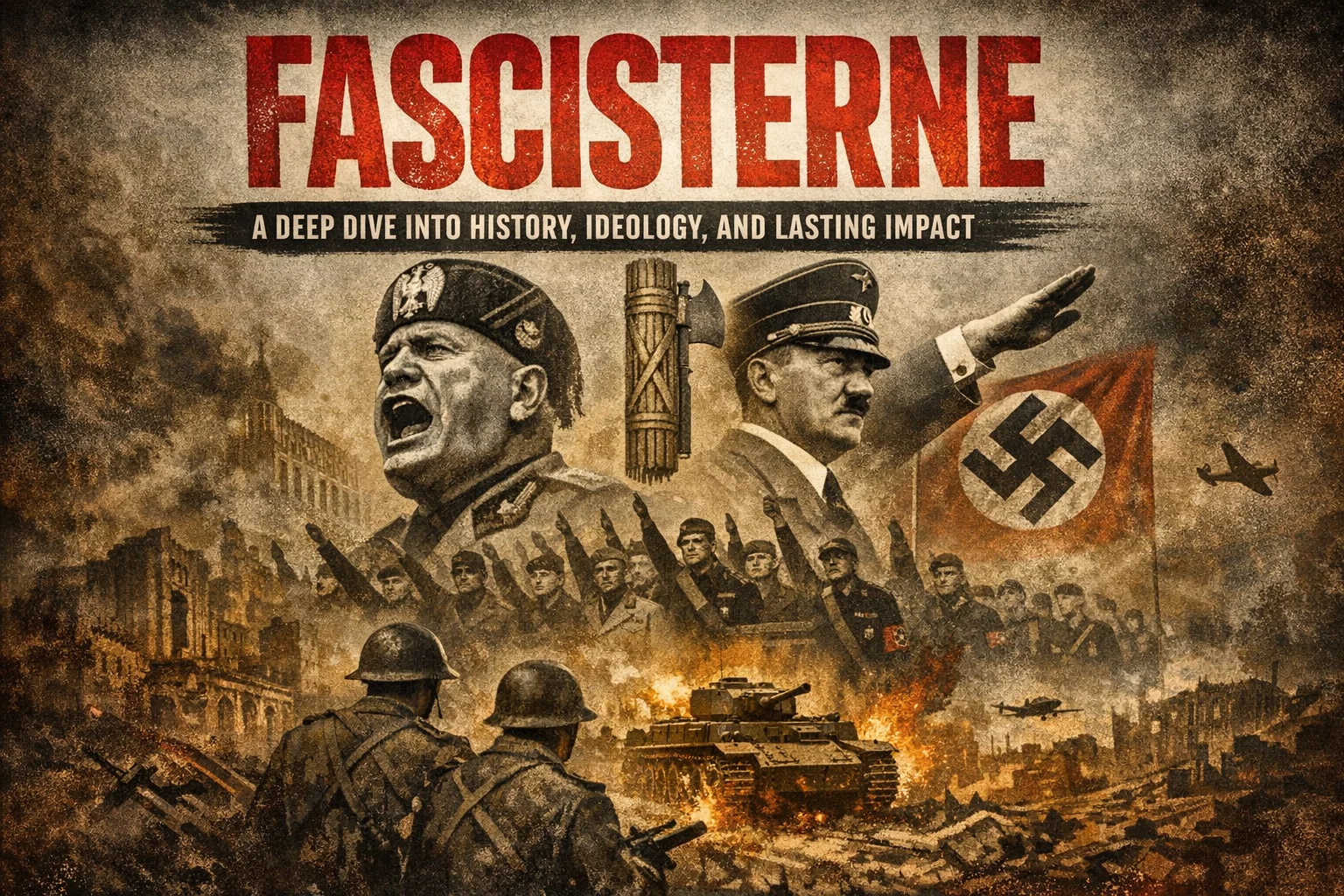
Introduction: Understanding Fascisterne
The term fascisterne refers to the members and supporters of fascist movements, particularly those that arose in early 20th-century Europe. Fascism, at its core, is an authoritarian political ideology, emphasizing extreme nationalism, centralized power, and suppression of dissent. Fascisterne shaped some of the most dramatic events in modern history, leaving lasting impacts on politics, society, and culture.
Studying fascisterne provides insight into how extremist ideologies can gain traction during periods of economic hardship, social unrest, and political instability. It also offers lessons on the conditions that allow authoritarian movements to rise, and the social and cultural mechanisms they use to maintain control.
Origins and Early Development
Fascism emerged after World War I, exploiting widespread dissatisfaction, economic crises, and political instability. Italy became the epicenter when Benito Mussolini organized the first fascist movement. The Italian fascisterne promoted national pride, order, and strength, appealing to citizens frustrated with the post-war government and social turmoil.
These early fascists relied on paramilitary organization, mass rallies, and disciplined political action to assert power. Their message combined nationalism with the promise of social and economic stability, which resonated across social classes.
Other European countries soon experienced similar movements. In Germany, Hitler’s Nazi Party adapted Italian fascism into a new form, combining nationalism with racial ideology. Spanish, Hungarian, and Romanian fascist movements followed, each modifying the ideology to fit their nation’s specific history and needs.
Core Ideology of Fascisterne
At the heart of fascisterne lies a belief in authoritarianism, state supremacy, and the subordination of the individual to the nation. Democracy, pluralism, and civil liberties were considered weaknesses, as fascists believed unity and strength required obedience and conformity.
Fascism is often anti-communist, anti-liberal, and anti-socialist. Fascisterne regarded political opposition as a threat to national cohesion. Cultural symbols, uniforms, parades, and slogans were integral to maintaining identity, loyalty, and societal control. Propaganda helped cultivate shared ideology and reinforced the perception of a unified nation.
The emphasis on national rebirth and glorified history often masked social inequalities and justified harsh policies against minorities, political opponents, and marginalized groups.
Vibe Coding vs Corral Coding: Which Development Style Wins in Modern AI Workflows? | Active Models
Political Influence and Expansion
The influence of fascisterne extended far beyond Italy. In Germany, Hitler used the movement to seize power, incorporating fascist ideology with racial hierarchy and aggressive expansionism. Spanish fascists under Franco implemented similar authoritarian structures, with strong militarization and suppression of dissent.
Economic instability, such as the Great Depression, made fascist promises of stability and growth appealing. Governments weakened, and fascisterne exploited fear, nationalism, and propaganda to consolidate power. Across Europe, fascist movements promoted unity under authoritarian regimes, often with militaristic and nationalist ambitions.
| Country | Key Fascist Leader | Movement Focus | Economic Approach |
|---|---|---|---|
| Italy | Benito Mussolini | National pride, order | Corporatism, state-led industry |
| Germany | Adolf Hitler | Racial ideology, expansion | Militarized economy, industrial growth |
| Spain | Francisco Franco | National unity, authoritarian control | State control with conservative social policies |
| Hungary | Miklós Horthy | Nationalist, anti-communist | Economic nationalism, corporatism |
Economic and Social Policies
Fascisterne often pursued corporatist economic models, combining state oversight with private enterprise. Public works, industrial modernization, and employment programs were central to propaganda campaigns portraying progress and unity.
Socially, fascist movements reshaped education, media, and cultural institutions. Propaganda, symbols, and controlled messaging reinforced their ideology. Minorities, dissenters, and opposition groups faced censorship, persecution, or elimination, highlighting the oppressive nature of fascist control.
Cultural and Psychological Tactics
The appeal of fascisterne depended on psychological and cultural manipulation. Mass rallies, chants, and visual symbols fostered a sense of community and loyalty. Fear and exclusion were leveraged to marginalize opponents and enforce compliance. Education and youth programs indoctrinated new generations, ensuring ideological continuity.
Quote: “Fascism is a disease of the collective mind, masked as patriotism and unity,” noted historian Stanley Payne, reflecting on how fascisterne captivated societies with promises of renewal.
Legacy and Modern Implications
Although most historical fascist regimes collapsed after World War II, the ideology’s legacy persists. Extremist nationalist movements, authoritarian tendencies, and political propaganda show echoes of fascisterne. Understanding their history helps recognize patterns of extremism and supports efforts to strengthen democracy and civil society.
Modern scholars stress that studying fascism is essential: it illuminates how ideology, culture, and political opportunism interact. Societies can learn from past mistakes to prevent authoritarianism from taking root again.
Conclusion
Fascisterne were more than political actors—they were architects of ideological, social, and cultural change that reshaped nations. By examining their history, ideology, and influence, we gain insight into the forces that allow extremist movements to rise. The lessons of the past remain relevant, reminding us to uphold democratic principles, vigilance, and social responsibility.
FAQ
What does the term fascisterne mean?
Fascisterne refers to members of fascist movements, typically those supporting authoritarian, nationalist, and anti-democratic ideologies in 20th-century Europe.
Where did fascisterne originate?
The movement originated in post-World War I Italy under Benito Mussolini and spread to Germany, Spain, and other European countries.
What were the core beliefs of fascisterne?
They emphasized authoritarian leadership, nationalism, subordination of the individual to the state, anti-communism, and suppression of political opposition.
How did fascisterne influence the economy?
They often implemented corporatist economic models with state-led industry, public works, and militarized growth while controlling labor and limiting rights.
Are there modern examples of movements influenced by fascisterne?
Yes, some modern nationalist and authoritarian movements draw on similar rhetoric, propaganda techniques, and nationalist appeals, highlighting the ongoing relevance of studying historical fascism.