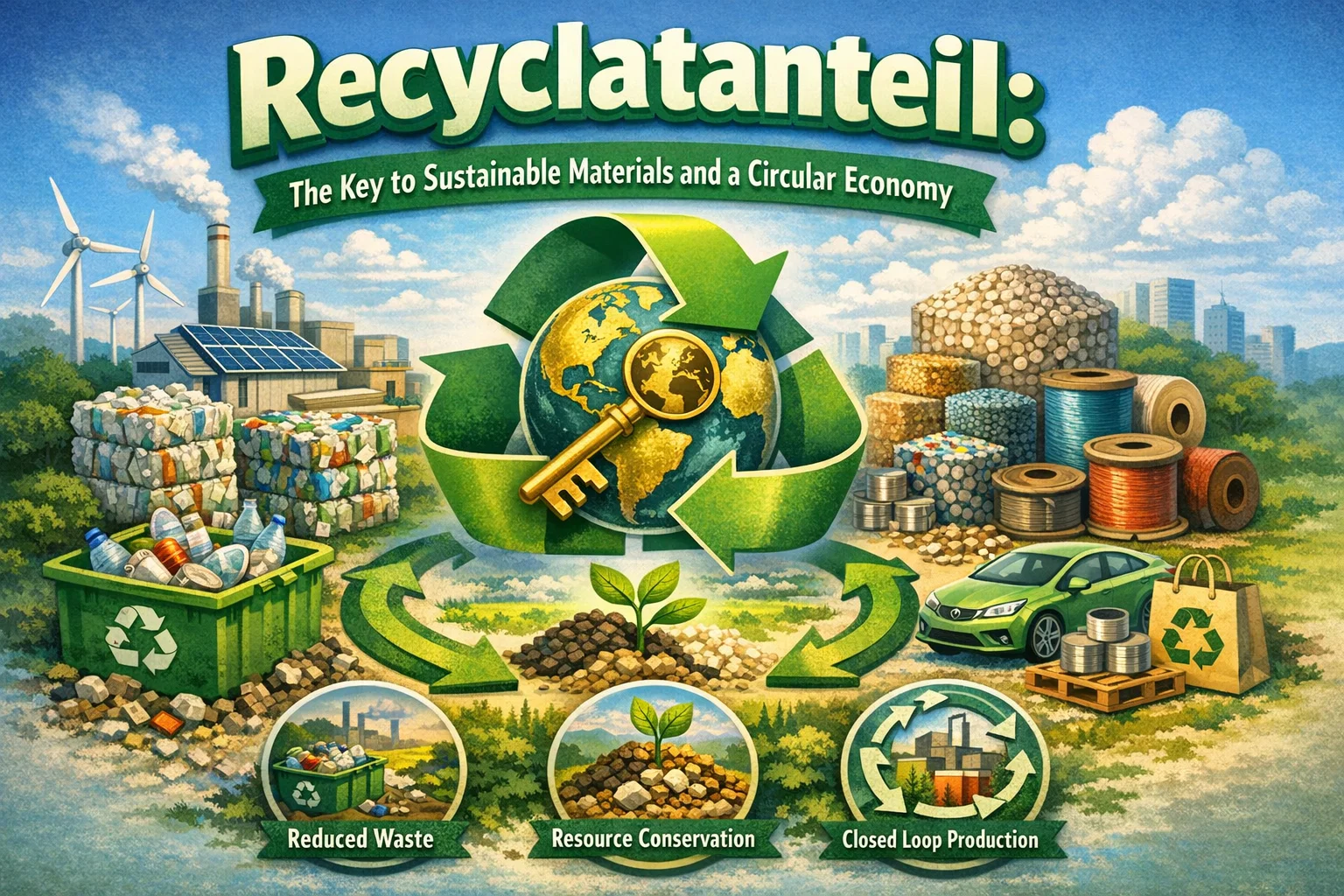
Sustainability has become one of the defining priorities of modern industries, governments, and consumers. Across the globe, businesses are rethinking how products are manufactured, packaged, and disposed of. One of the most important concepts driving this transformation is recyclatanteil, a term widely used in environmental policy, manufacturing, and sustainability reporting. It represents the percentage of recycled material used within a product, packaging, or raw material stream.
The growing importance of recyclatanteil reflects a broader shift toward a circular economy. Instead of the traditional “take, make, dispose” model, modern production systems are moving toward resource efficiency, material recovery, and reduced environmental impact. Companies that integrate recycled materials into their supply chains help conserve natural resources, reduce energy consumption, and minimize waste.
Understanding recyclatanteil is not only relevant for environmental professionals but also for consumers, policymakers, manufacturers, and sustainability advocates. From packaging regulations to corporate sustainability reports, the proportion of recycled material has become a critical metric used to evaluate environmental responsibility.
This comprehensive guide explores the meaning, benefits, measurement, challenges, and future of recycled material content in products and packaging. It explains how recyclatanteil shapes modern sustainability strategies and how industries can successfully integrate recycled materials into their production processes while maintaining quality and performance.
Understanding the Concept of Recycled Material Content
The concept of recycled material content refers to the proportion of materials in a product that originate from recycled sources instead of virgin raw materials. When manufacturers incorporate previously used or recovered materials into new products, they reduce the need to extract fresh resources from the environment. This practice supports sustainable manufacturing and contributes to long-term environmental protection.
In many industries, recyclatanteil serves as a measurable indicator of how effectively companies are incorporating recycled materials into their supply chains. Governments and environmental organizations often use this metric to evaluate sustainability initiatives and to set regulatory targets for manufacturers.
For example, packaging regulations in many regions require companies to increase the percentage of recycled plastic in bottles or containers. These requirements encourage businesses to invest in recycling infrastructure and material recovery systems. As a result, industries are increasingly prioritizing the integration of recycled inputs into their production processes.
The concept also extends beyond plastics. Paper, glass, metals, and textiles can all include recycled content, making recyclatanteil a versatile sustainability indicator across multiple sectors.
The Environmental Importance of Recycled Material Integration
Environmental sustainability lies at the heart of increasing recycled content in products. Natural resources such as oil, minerals, timber, and water are finite, and extracting them often causes environmental damage. By using recycled materials, manufacturers reduce the demand for new resource extraction.
A higher recyclatanteil helps conserve natural ecosystems and reduces energy consumption during production. Manufacturing goods from recycled materials typically requires less energy than producing them from virgin resources. This energy efficiency translates into lower greenhouse gas emissions and reduced carbon footprints.
Waste reduction is another key environmental benefit. Landfills around the world are rapidly reaching capacity, and improperly managed waste can contaminate soil, air, and water. Recycling materials and reintroducing them into production cycles keeps valuable resources in circulation and prevents them from becoming waste.
Environmental organizations frequently emphasize the importance of recycled content as part of broader sustainability strategies. As environmental researcher William McDonough once noted, “Waste equals food in a well-designed system.” His perspective reflects the idea that materials should continuously flow through economic systems rather than being discarded.
Economic Benefits of Increasing Recycled Material Content
The economic advantages of using recycled materials extend far beyond environmental protection. For businesses, incorporating recycled inputs can significantly reduce production costs over time, particularly when raw materials become scarce or expensive.
Manufacturers that adopt higher recyclatanteil often benefit from more stable supply chains. Recycled materials can be sourced locally through established recycling systems, reducing dependence on imported raw materials. This localized sourcing increases supply reliability and lowers transportation costs.
Another financial benefit is the growing consumer demand for environmentally responsible products. Many customers prefer products that contain recycled materials because they align with their environmental values. Companies that clearly communicate recycled content in their products can strengthen their brand image and build customer loyalty.
Governments also offer incentives and regulatory advantages for businesses that adopt sustainable practices. Tax benefits, environmental certifications, and access to green markets can further enhance the economic attractiveness of using recycled materials.
In competitive markets, sustainability has become a major differentiator. Companies that increase their recyclatanteil demonstrate leadership in environmental responsibility while also improving operational efficiency.
The Role of Recycled Content in the Circular Economy
The circular economy is a transformative approach to production and consumption that focuses on minimizing waste and maximizing resource efficiency. Instead of discarding products after use, the circular model encourages repair, reuse, recycling, and material recovery.
Recycled content plays a central role in this system. Materials that are recovered from discarded products are processed and reintroduced into manufacturing processes, creating a closed-loop system. This approach reduces the need for new resource extraction while maintaining material value.
In a circular economy, recyclatanteil becomes a key performance indicator. Governments and sustainability frameworks use this metric to evaluate how effectively industries are closing the resource loop.
Circular supply chains rely on collaboration between manufacturers, recycling companies, policymakers, and consumers. When products are designed with recyclability in mind, materials can be recovered more efficiently at the end of their life cycle.
Design for recycling is an increasingly important strategy. By selecting materials that can be easily separated and reused, manufacturers make it easier to increase recycled content in future products. This design philosophy supports long-term sustainability and resource conservation.
Industries Where Recycled Material Content Is Most Important
Many industries rely heavily on recycled materials to improve sustainability and meet environmental regulations. Packaging, construction, automotive manufacturing, electronics, and textiles are among the sectors where recycled content has become particularly significant.
The packaging industry has experienced one of the most dramatic shifts toward recycled inputs. Beverage bottles, food containers, and shipping materials are increasingly produced with recycled plastics, paper, or metals. Regulatory frameworks in several regions require minimum recycled content levels for packaging materials.
Construction is another sector where recycled materials play a major role. Recycled steel, glass, and concrete aggregates are commonly used in modern building projects. These materials reduce environmental impact while maintaining structural integrity.
Automotive manufacturers are also incorporating recycled plastics and metals into vehicle components. Interior panels, insulation materials, and certain structural parts can contain significant amounts of recycled material without compromising safety or performance.
The textile industry is experimenting with recycled fibers derived from plastic bottles, discarded fabrics, and industrial waste. This innovation helps reduce the environmental impact of clothing production while promoting sustainable fashion.
Measuring and Reporting Recycled Content in Products
Accurately measuring recycled material content is essential for transparency and regulatory compliance. Companies must track the origin and composition of materials used in their products to determine the proportion of recycled inputs.
Two primary categories are commonly used when evaluating recycled materials. Post-consumer recycled materials come from products that have already been used by consumers and collected through recycling programs. Pre-consumer recycled materials originate from manufacturing waste that is recovered before reaching consumers.
Organizations that calculate recyclatanteil typically use standardized methods established by environmental certification bodies and industry associations. These guidelines ensure that measurements are consistent and comparable across different companies and industries.
Transparency in reporting is also important for building trust with consumers and regulators. Sustainability reports often include detailed information about recycled content, material sourcing, and waste reduction strategies.
The following table illustrates common material categories and their typical recycled content potential in modern manufacturing.
| Material Type | Typical Recycled Content Potential | Common Applications |
|---|---|---|
| Aluminum | Up to 100% | Beverage cans, automotive parts |
| Glass | Up to 90% | Bottles, construction materials |
| Paper | 60–100% | Packaging, office paper |
| Plastic (PET) | 30–100% | Bottles, textiles |
| Steel | 50–95% | Construction, machinery |
These values vary depending on technological capabilities, recycling infrastructure, and product requirements.
Challenges Associated With Increasing Recycled Content
Despite its benefits, increasing recycled material content presents several challenges for manufacturers and recycling systems. One of the most significant challenges is maintaining consistent material quality.
Recycled materials may contain impurities or variations that affect performance. For example, recycled plastics can degrade over time, which may limit their use in certain high-performance applications. Manufacturers must carefully process and refine recycled materials to ensure they meet quality standards.
Another challenge involves supply availability. Recycling systems in many regions are still developing, which means that high-quality recycled materials may not always be available in sufficient quantities. Investments in recycling infrastructure are essential for supporting higher recycled content levels.
Product design can also affect recyclability. Products made from mixed materials are often difficult to recycle because separating components requires complex processes. Improving product design and material selection can help address this issue.
Cost considerations may also play a role. Although recycled materials can reduce costs in the long term, initial investments in processing technology and supply chain adjustments may be required.
Technological Innovations Supporting Recycled Materials
Technological advancements are rapidly improving the efficiency and quality of recycling processes. Modern sorting systems use artificial intelligence and optical sensors to identify and separate materials more accurately than traditional methods.
Chemical recycling technologies represent another breakthrough in the field. Unlike mechanical recycling, which melts and reshapes materials, chemical recycling breaks materials down into their original chemical components. These components can then be used to create new materials with properties similar to virgin resources.
Advanced purification techniques also help remove contaminants from recycled materials, allowing them to meet strict quality standards for food packaging and medical applications.
These technological developments are making it easier for manufacturers to increase recyclatanteil without compromising product performance or safety.
Innovation in materials science is also enabling the creation of new recyclable materials that can withstand multiple recycling cycles without degradation.
Government Policies and Regulatory Frameworks
Government policies play a crucial role in promoting the use of recycled materials. Many countries have introduced regulations that require manufacturers to include minimum recycled content levels in certain products.
Extended producer responsibility programs hold manufacturers accountable for the environmental impact of their products throughout their life cycle. Under these policies, companies must support recycling systems and ensure that their products can be recovered and reused.
Packaging regulations are particularly influential. Several governments require beverage companies to incorporate specific percentages of recycled plastics into their bottles. These mandates encourage investment in recycling infrastructure and stimulate demand for recycled materials.
Environmental labeling programs also help inform consumers about product sustainability. Labels that indicate recycled content provide transparency and allow consumers to make environmentally responsible purchasing decisions.
Policy frameworks continue to evolve as governments seek to accelerate the transition toward a circular economy.
Consumer Awareness and Sustainable Purchasing
Consumer behavior plays a major role in driving the adoption of recycled materials. As public awareness of environmental issues grows, many people actively seek products that reduce environmental impact.
Products with visible recycled content labeling often attract environmentally conscious consumers. This demand encourages companies to invest in sustainable materials and transparent supply chains.
Education and awareness campaigns help consumers understand the benefits of recycling and responsible waste management. When consumers properly separate waste for recycling, the quality and availability of recycled materials improve.
Sustainability advocates often emphasize the importance of consumer participation in the recycling system. Environmentalist Annie Leonard once remarked, “There is no such thing as ‘away’ when we throw things away.” Her statement highlights the importance of responsible consumption and waste management.
When consumers support products with higher recyclatanteil, they contribute to a more sustainable production system.
Corporate Sustainability Strategies and Recycled Materials
Many corporations now integrate recycled content goals into their sustainability strategies. Public commitments to increase recycled materials demonstrate environmental leadership and accountability.
Companies often set long-term targets for recycled content in packaging or products. These targets encourage innovation in material sourcing, product design, and recycling technology.
Corporate sustainability reports frequently include detailed metrics related to material usage, waste reduction, and recycling rates. Transparent reporting allows stakeholders to evaluate environmental performance and progress.
Collaboration with recycling companies, research institutions, and environmental organizations helps businesses develop more efficient recycling systems. Partnerships across the value chain enable companies to scale their sustainability initiatives.
A strong recyclatanteil strategy can strengthen brand reputation and align business practices with global environmental goals.
The Future of Recycled Materials in Manufacturing
The future of sustainable manufacturing will rely heavily on recycled materials. As natural resources become more limited and environmental regulations become stricter, industries will increasingly prioritize resource efficiency.
Technological innovation, improved recycling infrastructure, and supportive policies will make it easier to integrate recycled materials into production systems. Manufacturers will continue developing new methods to maintain product quality while increasing recycled content.
Digital technologies will also enhance material tracking and transparency. Blockchain systems, for example, can document the origin and recycling history of materials throughout supply chains.
The growing emphasis on circular economy principles ensures that recycled materials will remain a central component of sustainable production.
In the coming decades, recyclatanteil will likely become one of the most important sustainability metrics used by businesses and governments worldwide.
Conclusion
The integration of recycled materials into manufacturing represents one of the most effective strategies for reducing environmental impact and conserving natural resources. By increasing the proportion of recycled content in products and packaging, industries can significantly reduce waste, lower energy consumption, and support the development of a circular economy.
The concept of recyclatanteil has become an essential sustainability metric used to evaluate environmental responsibility across multiple sectors. Governments, businesses, and consumers all play a role in increasing recycled material usage and improving recycling systems.
Technological innovations, supportive policies, and growing consumer awareness are driving progress toward a more sustainable future. Although challenges remain, ongoing investments in recycling infrastructure and product design are making it easier to incorporate recycled materials into modern manufacturing.
A commitment to recycled content reflects a broader vision of responsible resource management and environmental stewardship. As industries continue to evolve, the use of recycled materials will remain a cornerstone of sustainable development and a critical step toward a cleaner, more resource-efficient world.
FAQ
What does recyclatanteil mean in manufacturing?
Recyclatanteil refers to the proportion of recycled material used in a product or packaging compared to virgin raw materials. Manufacturers use this metric to measure how much recycled content is included in their products, which helps evaluate sustainability performance and environmental impact.
Why is recyclatanteil important for sustainability?
Recyclatanteil is important because it reduces the need for new resource extraction and helps minimize waste. By increasing recycled content, manufacturers can lower energy consumption, reduce greenhouse gas emissions, and support a circular economy where materials are reused instead of discarded.
How is recyclatanteil calculated?
The calculation typically involves measuring the total weight of recycled materials used in a product and comparing it to the overall weight of the product. Companies often follow standardized guidelines from environmental organizations to ensure accurate and transparent reporting of recycled content.
Can all products have a high recyclatanteil?
Not every product can contain high levels of recycled materials due to performance, safety, or regulatory requirements. However, technological advancements are expanding the range of products that can incorporate recycled content while maintaining quality and durability.
How can consumers support products with higher recyclatanteil?
Consumers can support sustainable products by choosing items that clearly indicate recycled content and by participating in recycling programs. Proper waste separation and responsible purchasing decisions help increase the availability of recycled materials for future manufacturing.