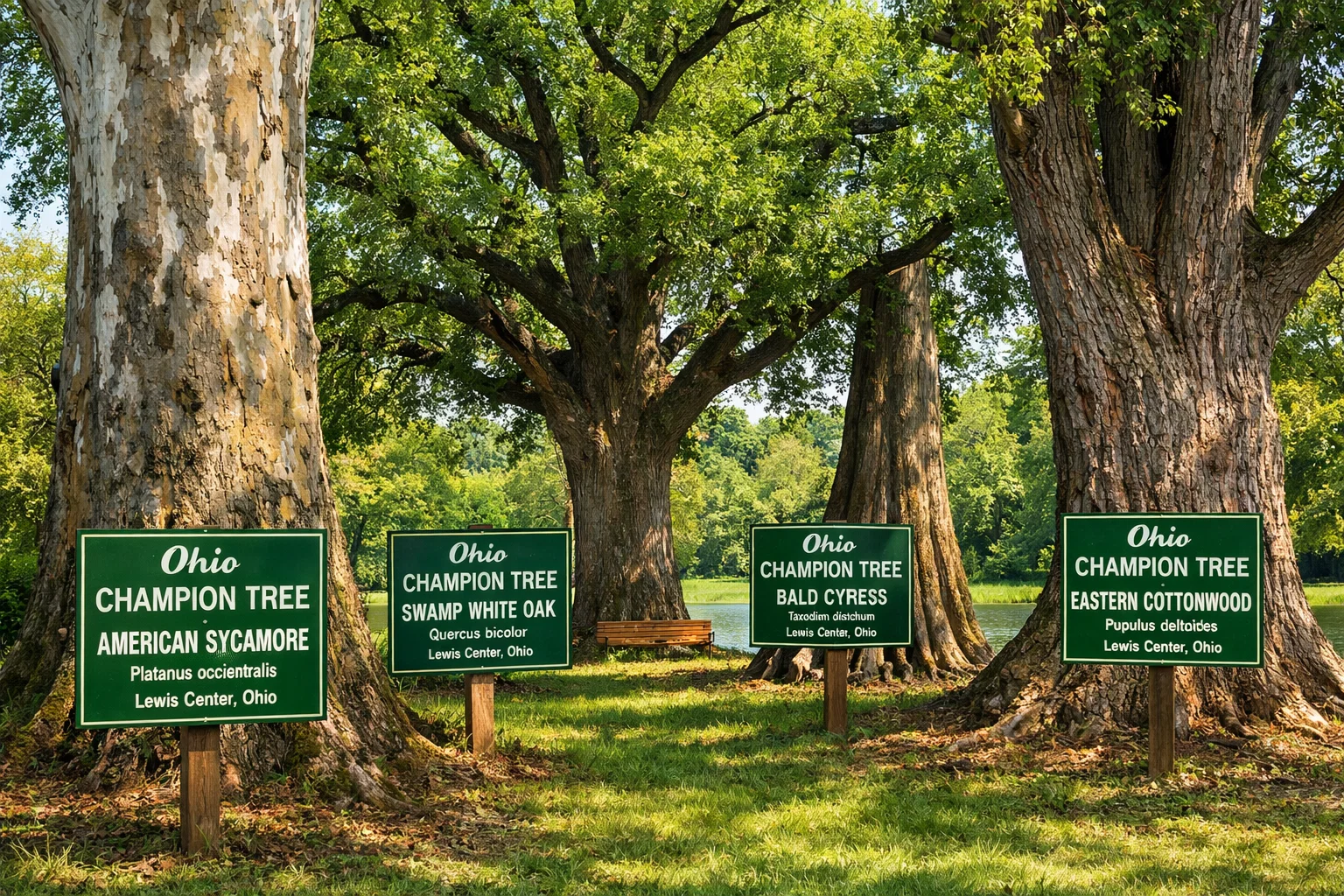
The Silent Giants: Uncovering the Ohio Champion Trees of Lewis Center
Tucked away in the suburban landscapes and quiet parks of Lewis Center, Ohio, stand living monuments of history, resilience, and natural wonder. These are not just large trees; they are the Ohio Champion Trees Lewis Center Ohio Champion Trees—the largest recorded specimens of their species in the entire state. They are crowned through a rigorous program managed by the Ohio Forestry Association, which seeks out, measures, and verifies these arboreal champions based on a precise formula combining trunk circumference, height, and average crown spread. A Champion Tree represents more than mere size; it embodies optimal genetics, historical survival, and a unique connection to the specific patch of land it has called home for centuries. For Lewis Center, a community within Delaware County that has witnessed rapid transformation from farmland to suburbia, these champion trees serve as vital anchors to a natural past, offering ecological benefits, educational opportunities, and profound beauty. This article is a comprehensive journey into their world—exploring the science of champion tree designation, profiling notable local giants, detailing their immense ecological and cultural value, and providing a clear guide for how you can help find, nominate, and protect these irreplaceable living legends for generations to come.
The Science of a Champion: How Ohio Crowns Its Largest Trees
The title of “Champion Tree” is not bestowed lightly. It follows a nationally recognized scoring system developed by American Forests, the nation’s oldest nonprofit conservation organization. For any given native or naturalized species in Ohio, the tree with the highest total points is deemed the champion. The formula is a specific calculation: Trunk Circumference (in inches) + Height (in feet) + ¼ of the Average Crown Spread (in feet). The circumference is measured at 4.5 feet above ground level, known as “diameter at breast height” or DBH in forestry. This standardized approach ensures fairness when comparing an oak with a massive girth to a tulip poplar that soars skyward.
Understanding this scoring demystifies why a particular tree earns its champion status. It’s a balanced tribute to three-dimensional grandeur. The process begins with public nominations from landowners, foresters, or enthusiasts. Specialists from the Ohio Forestry Association then conduct a verification visit, taking precise measurements with tools like clinometers for height and tape measures for girth. Once confirmed, the tree is added to the official Ohio Big Tree Register. This scientific rigor transforms a simple appreciation for a big tree into a formal recognition of a state-level champion, creating a living database of Ohio’s most significant trees and fostering a culture of conservation through citizen science.
A Legacy in Bark and Leaf: The History of Ohio’s Champion Tree Program
Ohio’s fascination with its largest trees has deep roots, formally organized into the Ohio Champion Tree Program in the 1940s. The program was inspired by a national movement to identify and preserve America’s arboreal giants, recognizing them as part of the country’s natural heritage. For decades, the program has been stewarded by the Ohio Forestry Association, a nonprofit organization dedicated to the sustainable management of Ohio’s forest resources. The registry serves as a historical snapshot, with some trees holding their champion titles for over half a century, while others are newly discovered as older champions succumb to age or storm damage.
This living record is constantly evolving. The history of the program mirrors Ohio’s own environmental story—from an era of widespread forest clearing for agriculture to a modern understanding of the critical importance of mature trees for biodiversity, climate resilience, and community health. Each champion tree in Lewis Center, therefore, is not just a biological wonder but a historical document. It has weathered changes in climate, land use, and human activity, silently witnessing the transformation of its surroundings. The program itself is a testament to shifting values, moving from mere curiosity about size to a profound commitment to preservation and education for future generations.
Lewis Center’s Arboreal Aristocrats: Notable Champion Species
While the specific roster of champion trees can change as new giants are discovered or old ones pass, Lewis Center and surrounding Delaware County are known to host several state champions and potential contenders. The region’s fertile soils and historical land-use patterns have allowed certain species to thrive to exceptional sizes. Common champion species in Ohio that may be found in the area include mighty oaks like the White Oak (Quercus alba) and Bur Oak (Quercus macrocarpa), which are renowned for their longevity and massive, spreading forms. The Tulip Poplar (Liriodendron tulipifera), one of the tallest hardwood trees in North America, is another frequent champion contender, often reaching staggering heights.
Other species to watch for include the American Sycamore (Platanus occidentalis), with its distinctive exfoliating white bark and massive, often hollow trunks, and the Shagbark Hickory (Carya ovata), prized for its delicious nuts and rugged, peeling bark. Even less common species can hold a champion title if they are the largest of their kind in the state. Discovering a champion often means looking beyond the familiar—a hawthorn, a serviceberry, or a hornbeam on a forgotten parcel of land could be the largest of its species in Ohio. This diversity highlights that champion trees are not exclusive to remote forests; they exist in backyards, parks, and along stream corridors, waiting for an observant eye to recognize their significance.
Beyond Measure: The Ecological Power of a Giant Tree
The value of a champion-sized tree extends far beyond its record-breaking dimensions. Ecologically, a single mature tree is a powerhouse. Its enormous canopy intercepts thousands of gallons of stormwater annually, reducing runoff and erosion. It acts as a massive air filter, removing pollutants and sequestering carbon at a rate exponentially greater than dozens of younger, smaller trees. A single large oak can support over 500 species of caterpillars, which in turn are the crucial food source for nesting songbirds, making these giants foundational to local food webs and biodiversity. Their complex bark, cavities, and massive limb structures provide essential habitat for owls, squirrels, raccoons, and countless insects and fungi.
Furthermore, these trees are genetic reservoirs. A tree that has grown to such an immense size in a specific location likely possesses superior genetics for disease resistance, climate adaptation, and overall vitality. Its acorns, nuts, or seeds carry this genetic legacy, offering potential for future forests that are resilient to changing conditions. The deep, extensive root systems of champion trees stabilize soil, prevent landslides, and cycle nutrients. In an era of climate change and habitat fragmentation, preserving these mature trees is one of the most effective and immediate actions we can take for ecosystem health. They are not just individuals; they are entire, thriving ecosystems in their own right.
Guardians of Memory: The Cultural and Historical Significance of Champion Trees
Champion trees are living history books. A 300-year-old white oak in Lewis Center may have been a sapling when the first European settlers arrived in the region. It likely provided shade for Native American hunting parties, witnessed the clearing of forests for farms, endured the industrialization of the 20th century, and now stands as a serene elder in a suburban park. These trees are tangible connections to our past, often serving as landmark trees for property lines, gathering spots for communities, or silent witnesses to historical events. They give a sense of permanence and perspective in our fast-paced modern world, reminding us of the long arc of time and nature’s endurance.
Their cultural value is also immense. Champion trees inspire art, photography, and local folklore. They become destinations for quiet reflection, outdoor education, and community pride. Schools can use a local champion tree as an outdoor classroom for lessons in biology, history, and mathematics. Communities often build events or festivals around their notable trees, fostering a shared sense of identity and stewardship. In protecting a champion tree, we are not just saving a plant; we are preserving a community landmark, a story, and an irreplaceable piece of our shared natural and cultural heritage. They are landmarks of memory, grounding us in the history of the land we inhabit.
The Hunter’s Guide: How to Nominate a Potential Champion Tree
You can play a direct role in expanding the Ohio Champion Tree Register. The process begins with identification and a preliminary measurement. First, learn to identify common tree species using field guides or apps. When you find a particularly large, healthy specimen that seems exceptional for its species, take initial measurements. Use a flexible tape measure to find the circumference in inches at 4.5 feet above the ground. For a rough height estimate, you can use the “stick method” or smartphone apps that use trigonometry. Visually estimate the average spread of the crown from drip line to drip line.
Next, compare your figures to the current champions listed on the Ohio Forestry Association’s Big Tree Register. If your tree’s measurements are close to or seem to exceed the current champion’s score, it’s time to submit a nomination. The OFA website provides a nomination form where you submit the tree’s species, location (including GPS coordinates if possible), landowner contact information, and your preliminary measurements. A certified verifier will then contact the landowner and schedule a visit to take official, precise measurements using professional tools. The entire process is collaborative, educational, and can be incredibly rewarding, potentially adding a new star to Ohio’s arboreal crown. It turns a walk in the woods into a treasure hunt with a meaningful outcome.
How Much Does Caseoh Weigh: A Deep Dive Into the Viral Internet Phenomenon
Stewards in Action: Conservation Challenges and Protecting Champions
The very traits that make champion trees magnificent also make them vulnerable. Their great age often means they are more susceptible to new pests, diseases, and climate stressors like prolonged drought or intense storms. Development pressure is a constant threat, as the land they occupy becomes increasingly valuable. Furthermore, construction near a champion tree can severely damage its critical root zone, which typically extends far beyond the drip line, leading to a slow decline. Soil compaction, grade changes, and pollution runoff are silent killers of mature trees in developing areas like Lewis Center.
Protection requires proactive, informed stewardship. For landowners, this means consulting with a certified arborist before any construction or major landscaping within the tree’s root zone. Proper mulching (avoiding volcano mulching), careful watering during droughts, and regular health inspections are essential. For the community, advocating for tree preservation ordinances, supporting land trusts that protect green spaces, and educating neighbors about the value of mature trees are critical actions. The champion tree program itself is a powerful conservation tool; once a tree is crowned, it often receives greater attention and care from both the owner and the community, increasing its chances of long-term survival. Conservation is an active, ongoing commitment to these gentle giants.
From Seed to Legacy: The Role of Champion Tree Genetics in Reforestation
The acorn from a champion white oak is not just any acorn; it carries the genetic blueprint of a proven survivor. This understanding is at the heart of a fascinating aspect of champion tree conservation: propagation. Organizations like American Forests and state programs sometimes collect scion wood (young shoots) from national and state champion trees to graft or collect seeds for growing new trees. The goal is to preserve and disseminate these superior genetics, creating a new generation of trees that may possess similar traits of size, form, disease resistance, and adaptability. These “child” trees are sometimes planted in “living libraries” or arboreta for study and future seed collection.
This work is crucial for climate-smart reforestation. As we look to rebuild urban canopies and restore natural forests, planting trees with proven, resilient genetics increases the likelihood of successful, healthy forests for the future. While not every seedling from a champion will become a champion itself (environment plays a huge role), it increases the genetic diversity and potential of our future landscapes. Supporting nurseries that prioritize local, native seed sources and learning about propagation programs are ways the legacy of a single Ohio Champion Trees Lewis Center Ohio Champion Trees can multiply, spreading its biological heritage across the state and beyond, long after the original giant is gone.
Economic and Community Roots: The Tangible Value of Big Trees
The benefits of champion trees and large mature trees generally translate into real economic value. Properties with healthy, large trees have been shown to have increased market values, often by significant percentages. The shade they provide reduces cooling costs for homes and buildings in the summer. On a municipal scale, a robust urban forest with large trees reduces the “heat island” effect, lowers public energy consumption, and manages stormwater, which reduces the need for expensive engineered infrastructure. Their presence in business districts and parks increases foot traffic, customer retention, and the overall aesthetic appeal that attracts residents and tourists alike.
From a community wellness perspective, the value is immeasurable but real. Studies consistently show that access to green spaces with mature trees reduces stress, improves mental health, encourages physical activity, and even correlates with lower crime rates. They provide the backdrop for community gatherings, playgrounds, and peaceful respite. A champion tree can become a point of local pride, a landmark for directions, and a symbol of the community’s commitment to quality of life and environmental health. Investing in the protection and care of these trees is not an expense; it is an investment in public health, economic stability, and community cohesion with a remarkably high return.
A Comparative Look: Ohio Champions vs. National Champions
To fully appreciate a state champion, it helps to understand the national scale. The National Register of Champion Trees, maintained by American Forests, uses the same scoring formula but pits the largest known tree of each species in the entire United States against each other. An Ohio champion may or may not be a national contender. For instance, Ohio’s champion Eastern Hemlock might be impressive within the state, but it would likely be dwarfed by the national champion hemlocks in the Smoky Mountains. However, for species whose range is concentrated in the Midwest or Northeast, an Ohio champion could very well be the national champion.
The table below illustrates this concept with hypothetical examples, showing how state champions are the first step toward national recognition.
| Tree Species | Ohio Champion (Hypothetical Location) | Ohio Points (Circum. + Height + ¼ Spread) | National Champion Location | National Points | Notes |
|---|---|---|---|---|---|
| White Oak | Lewis Center Park, Lewis Center | 375 + 110 + 15 = 500 | Wye Oak, Maryland (Deceased) | Historic | Ohio’s fertile soils often produce champion white oaks competitive on a national scale. |
| Tulip Poplar | Delaware County Preserve | 250 + 155 + 20 = 425 | Great Smoky Mountains, TN | 550+ | National champions for this species are often found in the southern Appalachians. |
| American Sycamore | Olentangy River Tributary | 425 + 120 + 18 = 563 | Ashland County, OH | 580+ | Ohio currently holds the national champion sycamore, showing state potential. |
| Shagbark Hickory | Private Residence, Lewis Center | 180 + 90 + 12 = 282 | Virginia | 320+ | A strong state champion but typically outmatched by specimens in the tree’s core range. |
This comparison highlights that while not every Ohio Champion Trees Lewis Center Ohio Champion Trees will be the biggest in the nation, each is unequivocally the biggest in Ohio, a title of immense significance. It also shows that Ohio is a powerhouse for certain species, sometimes holding the national title itself, which adds an extra layer of pride and responsibility to our conservation efforts.
The Future Canopy: Engaging the Next Generation of Tree Stewards
The long-term survival of champion trees depends on fostering a culture of appreciation in young people. Environmental education that moves beyond textbooks and into the outdoors is key. Schools and youth groups can adopt a local champion tree or a “future champion,” monitoring its health, learning its history, and understanding its ecology. Programs like Project Learning Tree and resources from the Ohio Department of Natural Resources provide curricula that turn a giant tree into a multidisciplinary teaching tool—for science, art, creative writing, and math. The sense of wonder a child feels standing beneath a tree that is older than the United States is a powerful seed to plant.
Furthermore, involving youth in citizen science projects, like measuring trees for the champion register or participating in community tree plantings using progeny from champion trees, creates hands-on investment. As one forester aptly noted, “We do not inherit the earth from our ancestors; we borrow it from our children.” Teaching them to value and measure their natural heritage ensures that the champion tree program and the ethos of conservation it represents will have passionate stewards long into the future. This engagement turns passive observation into active guardianship, securing the legacy of our Ohio Champion Trees Lewis Center Ohio Champion Trees for centuries to come.
Conclusion
The Ohio Champion Trees Lewis Center Ohio Champion Trees are far more than botanical curiosities. They are living infrastructure, historical archives, genetic libraries, and community treasures. They represent the pinnacle of what Ohio’s environment can produce when given time, space, and a bit of luck. In Lewis Center, a community balancing growth with natural heritage, these giants stand as silent but powerful advocates for conservation, reminders of a past landscape, and hopeful emblems for a sustainable future. Discovering them, nominating them, and most importantly, protecting them, is a collective responsibility and a profound privilege. By championing these trees, we commit to a legacy of natural wonder, ensuring that the map of Ohio remains dotted with these magnificent, record-holding giants, inspiring awe and reverence in all who stand beneath their boundless boughs.
Frequently Asked Questions
What exactly is an Ohio Champion Tree?
An Ohio Champion Tree is the largest known living specimen of a particular tree species within the state. The title is determined by a standardized point system that combines three measurements: trunk circumference, total height, and average crown spread. The program is officially managed by the Ohio Forestry Association, which maintains the public Big Tree Register.
How can I find out if there’s a champion tree in Lewis Center?
The best resource is the official Ohio Big Tree Register, available on the Ohio Forestry Association’s website. It lists all current champion trees by county and species. You can also contact the Delaware Soil and Water Conservation District or Preservation Parks of Delaware County, as they often have local knowledge of significant trees, including potential Ohio Champion Trees Lewis Center Ohio Champion Trees on public land.
Can a tree on my private property become a champion?
Absolutely. Many champion trees are located on private land. If you believe you have a very large tree, you can follow the nomination process by taking preliminary measurements and submitting them to the Ohio Forestry Association. A volunteer verifier will contact you to schedule an official measurement. Having a champion tree on your property is an honor and comes with resources and advice for its stewardship.
What are the biggest threats to champion trees?
The primary threats are development and construction damage to the root zone, soil compaction, new invasive pests and diseases (like the Emerald Ash Borer), severe weather events exacerbated by climate change, and simple old age. Protection requires proactive care, including consultation with arborists before any nearby ground disturbance and monitoring for signs of stress or infestation.
Why should communities care about protecting these specific large trees?
Champion trees are keystone structures in an ecosystem, providing disproportionate ecological, economic, and social benefits. They offer superior stormwater management, carbon sequestration, and wildlife habitat. They increase property values, reduce energy costs, and serve as iconic landmarks that foster community identity and pride. Protecting them is a direct investment in environmental health and quality of life, preserving a unique piece of Ohio’s natural heritage for future generations to study and enjoy.